
- Басты бет
- /
- Зерттеулер
- /
- Central Asia's Iranian Dilemma: The Road That Cannot Be Bypassed
Central Asia's Iranian Dilemma: The Road That Cannot Be Bypassed


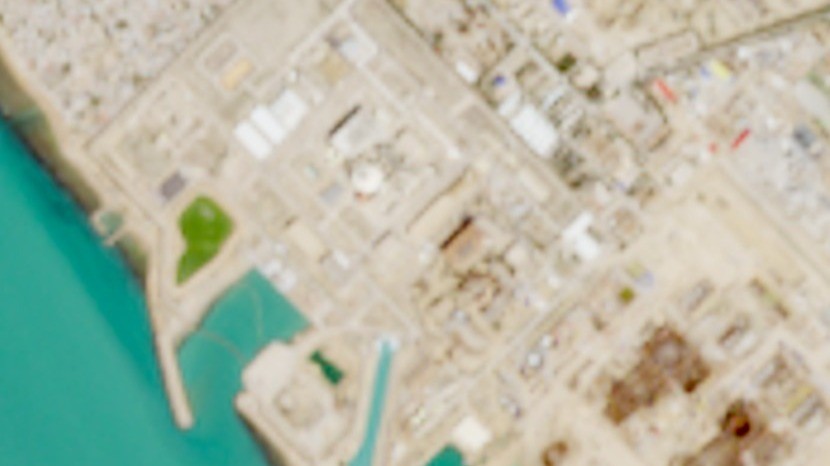
60% of Uzbekistan's cargo from Turkey and Europe moves through Iranian ports, according to the country's transport minister. The stress test is live, and it is the second in nine months.
Geography as Destiny
Central Asia did not start the war with Iran. But days into it, the region is absorbing the consequences, exposing a structural vulnerability decades in the making: virtually every major trade corridor connecting these landlocked countries to global markets either crosses Iranian territory or depends on its stability.
Kazakhstani economist Almas Chukin put it simply this week: Iran is the "window to the sea from the West" for Central Asia. From the Turkmen-Iranian railway junction to the Persian Gulf is 1,200-1,500 km, by his estimate. By rail through Iran to Europe, 3,500 km.
Central Asia sits at the heart of the International North-South Transport Corridor (INSTC). For regional logistics hubs like Aktau and Turkmenbashi, the overland route through Iran provides the fastest access to the Indian Ocean. While alternative multimodal routes stretch transit times to 30-40 days, the Iranian corridor cuts the journey by one to two weeks. For urgent cargo, it is the only viable artery.
On the China axis, rail freight through Iran takes 14-18 days versus 30-45 by sea. On current rates it also undercuts sea freight by roughly a third, following the 2024 tariff agreements between the corridor's railway operators.
Infrastructure Exists. Political Conditions Do Not.
But even built corridors don't work. The Kazakhstan-Turkmenistan-Iran railway opened in 2014. The eastern route of the North-South corridor is rated at 10 million tons a year, with a target of 15 million by 2027. Actual flows are a fraction of that: 1.6 million tons passed through the main Bolashak crossing in 2024. The reasons are sanctions uncertainty, absent return cargo flows, and shippers' reluctance to route goods through a country under continuous restrictions.
The broader INSTC was built on the same logic. India alone has invested hundreds of millions of dollars in the Chabahar port and the Chabahar-Zahedan railway, a route designed to bypass Pakistan and open direct access to Central Asian markets. Chabahar's first-phase expansion lifted port capacity from 2.5 to 8.5 million tons.
All of this is now either damaged, inaccessible, or frozen.
The Second Shock in Nine Months
In June 2025, the brief but intense Israel-Iran conflict forced the region to urgently reroute trade flows. Nine months later, the disruption is deeper. The IRGC has declared the Strait of Hormuz closed, and Gulf airspace is shut down. Five governments are conducting simultaneous evacuations. Kazakhstan alone expects to bring out about 5,000 citizens, via Oman, Saudi Arabia, Azerbaijan, Armenia and Turkmenistan.
The alternatives being considered, via the Caucasus, into China, through Afghanistan and Pakistan, each carry severe limits in capacity, security, or dependency.
And then there is Turkmenistan. Four additional border crossings with Iran opened within days, bringing the total to five. The most closed country in the region has turned into its most important evacuation corridor. For a government that rarely opens its borders even to tourists, this is a signal beyond a humanitarian reflex.
Every Alternative Leads Back to Iran
Even the routes designed to bypass Iran are either tied to its geography or constrained by physical infrastructure.
The Trans-Caspian route, the Middle Corridor, has hard limits. A shortage of Caspian ferries, the limitations of Aktau and Kuryk ports, and uncoordinated cross-border tariffs mean it can handle a portion of shipments, but physically cannot absorb the volumes that flowed through Iranian corridors.
Overland routes through the Caucasus will not provide a quick fix either. The transit route through Armenia remains largely a project on paper. The alternative, the roughly 40-kilometer Zangazur corridor through Azerbaijan, faces its own geopolitical complications.
What Lies Ahead
The Iranian conflict raises a question deferred for two decades: can the region's entire trade architecture rely on a single bottleneck subjected to recurring military pressure and sanctions?
The core problem: existing infrastructure is underutilized, while alternative routes remain underdeveloped. The Kazakhstan-Turkmenistan-Iran railway has run at a fraction of its capacity for years. The China-Kyrgyzstan-Uzbekistan railway has entered active construction, but it will not solve today's logistical crisis. The region has more projects on a 5-to-10-year horizon than working corridors available now.
India's investments in Chabahar are paralyzed along with transit cargo. Two polar scenarios lie ahead. If political change in Iran leads to sanctions being lifted, this infrastructure becomes exceptionally lucrative. If instability drags on, India loses its only overland bridge and shares Central Asia's isolation from Eurasian markets.
Turkmenistan is the variable no one predicted. If Ashgabat keeps its borders open beyond the crisis, as a permanent transit hub rather than an emergency corridor, it changes the calculus for every route near Iran.
The Bottom Line
As Chukin framed it: if Iran gets a regime that is "not necessarily friendly to the West, but crucially, not hostile," sanctions will be lifted. Central Asia, 80 million people across the Caspian, would gain direct access to global markets. A completely different economic reality.
For now, Iran remains Central Asia's shortest route to the open sea, and this path is closed for the second time in nine months. It will happen again. The question is whether the region builds resilience before it does.
Sources & References:
Kursiv.media - Regime Change in Iran Opens Kazakhstan's Shortest Path to the World Ocean (economist Almas Chukin), 2 March 2026.
Gazeta.uz - Uzbekistan Sets Up Task Force on Logistics amid Middle East Escalation (Transport Minister Ilhom Makhkamov on the southern corridor), 24 June 2025.
Orda.kz - Kazakh MFA: Citizens Evacuated from the Middle East via Oman and Saudi Arabia, 3 March 2026.
The Astana Times - Kazakhstan Evacuates Nearly 1,000 Citizens from Middle East with Air and Land Routes, 4 March 2026.
The Times of Central Asia - Turkmenistan Opens Additional Crossings as Uzbekistan Evacuates Citizens from Iran, 5 March 2026.
The Times of Central Asia - Kazakhstan, Turkmenistan, Russia, and Iran to Boost Cargo Transport Along North-South Corridor, 19 February 2025.
Egypt Today - IRGC Declares Strait of Hormuz Closed, 27 March 2026.
SAS Company - Shipping from China to Iran: Costs, Transit Time, Sea, Air and Rail Options, June 2026.
Direct Drive Logistic - Rail Freight to Tehran via Khorgos: Cost and Transit Comparison, 2026.
JIMR - Chabahar Port: A Gateway for India's Influence in Afghanistan and Beyond, Vol. 20, Issue 2, 2025.
Overcoming Infrastructure Barriers to INSTC Development, industry report (index1520.com), 2025.
Latest Insights
Барлық жарияланымдар