
- Главная
- /
- Исследования
- /
- "Black Rain" Over Iran
"Black Rain" Over Iran


Environmental intelligence from open sources: fire engineering, international law, and the Kuwait precedent
1. Why environmental OSINT matters here
Analysis of Iran usually concentrates on nuclear facilities, missiles and sanctions. The March strikes exposed a different layer: environmental damage from conflict can be measured from outside, in near real time, with free tools. Environmental intelligence (ENVINT) uses satellite imagery, scientific literature and social media to track this damage. I apply it here through three angles: fire engineering, the Kuwait precedent, and satellite monitoring.
2. The trigger event
The strikes hit on March 8, 2026. The Conflict and Environment Observatory (CEOBS) identified four targeted facilities: the Karaj, Shahran and Aghdasiyeh depots and the Tehran refinery. Fires burned for more than 24 hours, some for several days.
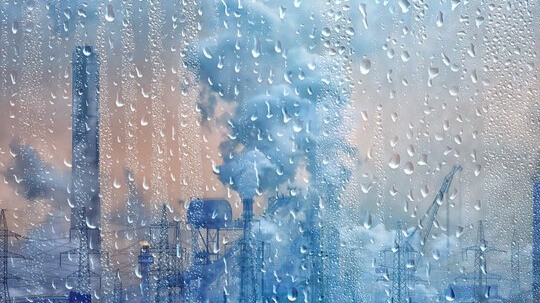
The Iranian Red Crescent warned that rain could carry toxic hydrocarbon compounds and sulfur and nitrogen oxides, causing chemical burns and lung damage, and told residents to stay indoors and seal contaminated clothing in bags. The rain came over the weekend. Residents reported headaches, breathing difficulty and black oily spots on buildings and cars. A CNN correspondent described it as raining oil.
The WHO backed the indoor advisory. Its spokesman Christian Lindmeier called the black and acidic rain "indeed a danger for the population, respiratory mainly" and confirmed a massive release of toxic hydrocarbons, sulfur oxides and nitrogen compounds into the air (Reuters, 10 March 2026). The UN Human Rights office said the strikes raise serious questions about proportionality and precaution, noting that the sites hit "do not appear to be of military exclusive usage". Israeli military spokesman Nadav Shoshani called the depots "a legal military target", saying they served Iran's war effort.
Within a day, Tehran cut personal fuel-card quotas from 30 to 20 liters (Anadolu Agency; WSJ, 8 March 2026).

[Fig.1: Middle East theater, March 9, 2026.]
3. Why the fires burned so long
Fire engineering explains the duration. An analysis of accidents at oil and petroleum storage tanks in Russia over 2014-2023 found that 78% of incidents escalated into fire or explosion: 37% fire only, 41% fire combined with a fuel-air explosion (Basova et al., 2024). Once one tank is burning, the fire tends to spread to neighboring tanks in the group; Russian fire-service literature treats this cascade as a standard failure mode (Garaev, 2025). Boilover typically develops after about 60 minutes of burning when the fuel's moisture content exceeds 0.3% (Garaev, 2025). In a conflict zone, with several tanks burning at once and firefighting degraded, suppression takes far longer than any peacetime norm. This matches what was observed in Tehran: the depots burned for more than a day, some for several days.
4. The Kuwait precedent and the law
In 1991, retreating Iraqi forces set fire to around 500 Kuwaiti oil wells. The fires burned for months. Adam Roberts recorded the key figures in the International Review of the Red Cross in 1992: the fires released perhaps 3% of the world's annual fossil fuel CO2 emissions, and black rain was reported in Turkey, Iran and the Himalayas. Oil from destroyed wells formed lakes and reportedly reached aquifers.
The parallel with Tehran is real, and so is the difference. Kuwait's wells burned in a sparsely populated desert as a punitive act by a retreating army. Tehran's depots burned next to a metropolis of about 10 million people, in a country in its sixth consecutive year of drought.
Roberts also mapped the legal frame, and it transfers directly: Article 23(g) of the 1907 Hague Regulations, Articles 147 and 53 of the Fourth Geneva Convention, the 1977 ENMOD Convention. UN Security Council Resolution 687 later created the compensation mechanism for environmental damage. Iran's foreign ministry spokesman Esmaeil Baghaei wrote: "By targeting fuel depots, the aggressors are releasing hazardous materials and toxic substances into the air, poisoning civilians, devastating the environment, and endangering lives on a massive scale." I am not a lawyer, and ENVINT does not issue verdicts. The job here is to document the damage so that the record holds up if these questions are ever examined formally.
5. The ENVINT toolkit
The working stack for this case:
-
Sentinel-5P / TROPOMI (ESA, launched 2017): SO2, NO2, CO, O3, CH4. Daily global coverage at 3.5 x 5.5 km resolution. Near-real-time data with a delay of about 3 hours via the Copernicus Open Access Hub and Google Earth Engine. Iranian researchers publish on this platform actively, so pre-strike baselines exist.
-
Sentinel-2 / NDWI: reservoir capacity and surface water stress.
-
NASA FIRMS: active fires and thermal anomalies at energy infrastructure.
-
Google Earth Engine: time-series analysis of atmospheric pollution.
-
Social media and Telegram: photos, videos and local reports for ground truth.
6. The baseline was already bad
An acute event sits on top of chronic pollution. During COVID-19 lockdowns, Sentinel-5P data showed pollutant drops across Iranian cities: NO2 down 1-33%, SO2 down 5-28%, CO down 5-41% (Broomandi et al., 2020). Read in reverse, these numbers show the scale of everyday emissions. The March fires added an acute spike on top of that baseline. Fire-generated CO2 rarely enters standard emissions accounting; Basova et al. propose classifying it as a dangerous fire factor of indirect delayed action. Kuwait gives the order of magnitude: about 3% of global annual emissions from a single event. The Tehran fires are smaller, but they land on an already degraded environment.
7. Acid rain meets water bankruptcy
The rain fell on a city already failing on water. By November 2025, Tehran's five main reservoirs were nearly empty: one had dried up completely, others stood at 5-8% capacity. President Pezeshkian declared relocating the capital a necessity. Agriculture takes up to 90% of Iran's water withdrawals. The country loses about 100,000 hectares a year to desertification, by official estimates, and land subsidence in the worst-affected areas runs at 20-30 cm per year.
Water infrastructure entered this war separately. On March 7, Iran's foreign minister accused the United States of striking the desalination plant on Qeshm Island, which cut water supply to 30 villages. The United States, Israel and the UAE all denied involvement, and attribution remains unresolved (CBS News; New York Times). A day later, an Iranian drone damaged a desalination plant in Bahrain. Whatever the truth about Qeshm, desalination has already been hit on both sides of this conflict, in a region that drinks desalinated water.
In Kuwait, oil seeped into aquifers under a desert. In Tehran, contaminated rain falls into the watershed of a depleted capital water system. What share of the contamination reached water infrastructure, I cannot quantify from open sources. The monitoring that would answer this is exactly what ENVINT can do, and I have not found evidence that anyone is doing it publicly.
8. Conclusion
What can be stated with sources: four facilities were hit, fires burned for more than 24 hours, black acidic rain fell on a city of about 10 million people, the WHO and UN issued warnings, and a legal frame exists that was applied after Kuwait. What cannot be stated yet: the dose residents received, the share of contamination that reached water infrastructure, and the long-term health cost. Those questions are answerable with the tools listed above. That is the case for environmental OSINT, made by the event itself.
Sources & References:
Basova, E.A., Ivakhnyuk, S.G., Koroleva, L.A., Semenov, V.V. - Particularities of the Occurrence of Large Fires at Oil and Gas Facilities and Methods of Reducing Emergency CO2 Emissions, Journal of Civil Protection, Vol. 8, No. 3, 2024, pp. 325-336. (In Russ.) DOI: 10.33408/2519-237X.2024.8-3.325.
Garaev, I.N. - Fire Hazard of Oil Refining Industry Facilities, Paradigma (e-journal), No. 9.2, 2025. (In Russ.) Available via CyberLeninka.
Broomandi, P., et al. - Impact of COVID-19 Event on the Air Quality in Iran, Aerosol and Air Quality Research, Vol. 20, 2020.
Roberts, A. - Environmental Destruction in the 1991 Gulf War, International Review of the Red Cross, No. 291, 1992.
Forbes - 'Toxic' Black Rain Falls on Tehran After Oil Sites Struck, 8 March 2026.
ABC News - What to Know about 'Black Rain' that Fell in Iran after Strikes on Oil Reserves, 10 March 2026.
Fortune - Tehran Engulfed in Fire, Smoke and Acid Rain Following Strikes, 8 March 2026.
UN News - 'Toxic Rain' Warning from Oil Depot Strikes amid Ongoing Middle East War, 10 March 2026.
Reuters - WHO Warns of 'Black Rain' Health Risks in Iran, 10 March 2026.
Newsweek - Health Fears Rise in Tehran after Israeli Strikes Bring Black Rain, 13 March 2026.
Anadolu Agency - Iran Cuts Fuel Quota in Tehran after US-Israeli Strikes on Oil Depots, 8 March 2026.
CBS News - Iran's Foreign Minister Says U.S. Has Struck a Desalination Plant, 9 March 2026.
The New York Times - Vital Desalination Plants in Iran and Bahrain Are Attacked, 8 March 2026.
The Conversation - 'Acid Rain' Is Falling over Parts of Iran: An Atmospheric Scientist Explains (Gabriel da Silva), 9 March 2026.
Conflict and Environment Observatory (CEOBS) - assessment of the March 2026 strikes on Tehran oil facilities, March 2026.
The Conversation - Iran's President Calls for Moving Its Drought-Stricken Capital amid a Worsening Water Crisis, 1 December 2025.
Mother Jones / Vox - Iran's Capital Must Relocate Due to Dire Water Situation, President Insists, 22 November 2025.
Iran International - Mismanagement, Not Drought, Pushes Iran toward Water Bankruptcy, 25 November 2025.
ESA / Copernicus - Sentinel-5P TROPOMI instrument and data, Copernicus Open Access Hub.
Google - Google Earth Engine.
NASA - Fire Information for Resource Management System (FIRMS).
Latest Insights
Все публикации